A clearer look at where blockchain creates practical value: lower platform fees, stronger trust, direct digital ownership, and new business models when the use case is right.
+40% Speed
-25% Cost
Introduction
Blockchain has matured beyond speculation and early hype. For the right products, it can solve a very practical problem: too much value sits with the platform, while users, creators, and partners have limited control over assets, access, and transaction flows.
That is where decentralized applications can make sense. Instead of routing every action through a single company-owned backend, dApps use smart contracts and token-based logic to handle ownership, transfers, payments, and access rules in a more transparent way.
This case study looks at where that model creates genuine business value, where it improves user trust, and what companies need to think about before building with blockchain.
The Challenge: Centralized Platforms Create Friction
Most digital products still run on fully centralized systems. That works well in many cases, but it also creates trade-offs that become more visible as a platform grows.
Common issues include:
- Platform fees and intermediaries eating into margins
- Limited transparency around ownership, transactions, and rule changes
- Weak portability for digital assets, identities, or rewards
- Heavy operational dependence on one platform operator
- User skepticism when value and control feel one-sided
For companies building marketplaces, communities, creator products, or digital ecosystems, those constraints can directly affect growth. They can slow down transactions, reduce trust, and make it harder to create incentives that feel fair to all sides.
The Solution: Use Blockchain Where It Removes Bottlenecks
The value of blockchain is not that it is new. The value is that it changes who controls records, assets, and transaction logic.
A well-designed dApp can help in several ways.
1. Clearer ownership and auditability
When transactions and ownership records are written to a blockchain, users can verify what happened instead of simply trusting a platform interface. That matters in products where provenance, access rights, or transfer history influence trust.
2. Better digital asset models
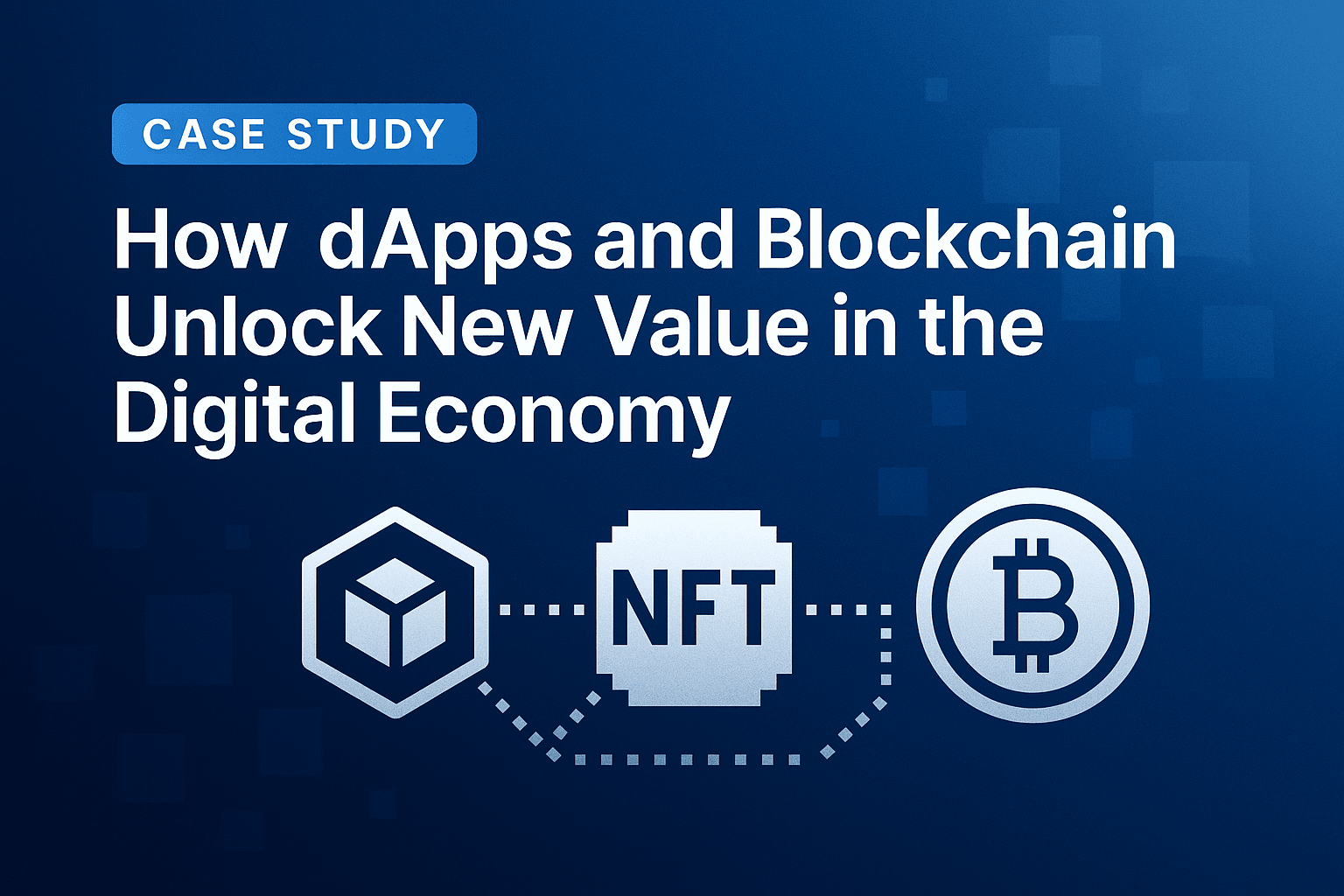
Tokens and NFTs can be useful when they represent something real inside the product: access, membership, entitlements, collectibles, rewards, or transferable digital goods. When designed well, they create clearer user incentives and new monetization options.
3. Lower dependency on intermediaries
Smart contracts can automate transfers, payouts, revenue sharing, royalties, and other business rules. That can reduce manual operations and remove layers of platform friction.
4. Global reach by default
Blockchain-based products can serve users across markets without rebuilding the payment and ownership layer country by country. That does not remove legal or compliance work, but it can simplify how value moves through the product.
5. New business models
The strongest use cases usually come from business model design, not technology alone. Examples include creator royalties, token-based loyalty systems, community-owned ecosystems, secondary market participation, and programmable access to products or services.
Where We See Real Impact
When blockchain is applied to a real commercial problem, the impact tends to show up in a few specific areas:
- Higher trust: Users can verify ownership, transfers, and rules more easily.
- Stronger retention: Digital ownership and better incentives can deepen engagement.
- Faster operations: Smart contracts reduce manual handling for payouts, permissions, and transaction workflows.
- New revenue streams: Royalties, token utilities, and secondary-market logic can create value that traditional systems struggle to support.
- Better ecosystem alignment: Users, creators, and operators can all benefit from the same underlying model instead of competing against platform constraints.
Two examples make this easier to understand.
In creator platforms, blockchain can let artists sell directly, keep stronger control over their work, and receive royalties when assets are resold. In gaming or digital communities, it can give users ownership of in-product assets instead of locking everything inside one closed database.
What Companies Need to Get Right
The technology alone does not create value. The product model has to justify it.
Before building, companies should answer a few practical questions:
- What ownership problem are we solving?
- Why does this need to be transferable or verifiable?
- What friction disappears if we use smart contracts?
- Will users clearly understand the benefit?
- Are compliance, wallet experience, and onboarding realistic for our target market?
If the answer is vague, blockchain is usually the wrong tool. If the answer is concrete, it can become a strong competitive advantage.
Conclusion
dApps and blockchain are not a fit for every product. But when the business depends on trust, digital ownership, shared incentives, or programmable transactions, they can unlock models that centralized platforms struggle to support.
The opportunity is not in adding Web3 language to a product. It is in designing a system that gives users, creators, and operators a better way to exchange value.
At ITGRATE, we help companies assess whether blockchain is commercially justified, define the right product model, and build the underlying platform with clear business goals in mind.